Publications
Oral History Interviews for the African-American Heritage Survey 2008
Title:
Oral History Interviews for the African-American Heritage Survey 2008
Author:
The Maryland-National Capital Park and Planning Commission
Source of Copies:
The Maryland-National Capital Park and Planning Commission
14741 Governor Oden Bowie Drive
Upper Marlboro, MD 20772
Number of Pages:
156
During the 1996 celebration of the county’s Tricentennial, the Maryland-National Capital Park and Planning Commission published the African-American Heritage Survey. The publication documented 107 historic properties and 14 historic communities of significance to Prince George’s County African-American history and heritage including residences, schools and lodge halls, churches and cemeteries, and urban and rural communities.The interviews are filled with rich detail about day-to-day life in Prince George’s County and will assist in the efforts of many groups to document and perpetuate the county’s African-American heritage for future generations.
Related Documents:
 AA Heritage Survey
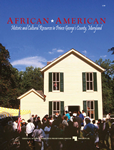
2012 African-American Historic and Cultural Resources in Prince Georges County, Maryland
Title:
2012 African-American Historic and Cultural Resources in Prince Georges County, Maryland
Author:
The Maryland-National Capital Park and Planning Commission
Prince George's County Planning Department
Publication Date:
02/01/2012
Source of Copies:
The Maryland-National Capital Park and Planning Commission
1616 McCormick Drive
Largo, MD 20774
Number of Pages:
296
This book presents individual properties and communities that are significant to the African-American history of Prince George’s Count. The 181 properties include residences, churches and cemeteries, schools, fraternal lodges, a monument, an airfield, an amusement park, archeological sites, and commercial establishments; the 19 historic communities include both urban subdivisions and rural villages, as well as early towns and retreat communities. For most individual properties there is at least one illustration or photograph, an architectural description, and a summary of the resource’s historic significance. For each community, there is a map, graphic illustrations, and a history of the community’s development and signifi cance. The book is divided into three major sections: Introduction and Essays which provides background and context for the resources and includes essays on Black History, Significance, Education, Suburban Settlement, and Archeology; Historic Communities, which presents the 19 communities and the 119 properties within them; and Schools, Churches and Cemeteries, Dwellings, and Other Resources located Outside Historic Communities, that presents the remainder of the resources. Following the three major sections are four appendices which enumerate the resources and organize them by type, community, and designation. The appendices are followed by a countywide map of many of the resources with color photographs of selected historic properties on the reverse.


